
Me, Darryl, and Doc
Greatness was never the whole story

Every Mets game was exciting to me. At eight or nine years old, not unlike today, I could tap my feet all day long, enjoying (and sometimes enduring) whatever the day brought, or whatever child activities my parents had in store for me. But as evening approached, it was the baseball game that I always looked forward to most. Watching with my dad or my younger brother, sometimes on television and often listening on WFAN as we huddled around the radio my parents had in the living room.
But no night was more special than when Dwight Gooden was pitching. And any game where Darryl Strawberry crushed a ball over the fence at Shea Stadium was special. Watching Doc Gooden pitch felt to me like I was watching the ultimate master of his craft. The fastball blowing by hitters, and their knees buckling on that devastating 12-to-6 curveball. Darryl’s swing was my favorite of any player in baseball. Everything looked so easy to him, and the baseball would explode into the air.
To me, they seemed like gods, as if only some type of magical touch could bestow that level of baseball talent into any one human being. On the mound, I would daydream about wearing 16, Doc’s number, on my back. Every time Bob Murphy would start with, “…so here comes Strawberry to the plate,” I’d lean in just a bit closer to the radio. Cries of, “Struck him out!” when Doc would buckle a helpless batter with that curve or blow a fastball by him would elicit a loud cheer and a solid high-five all around the house. Childhood creates a wonderful sense of exaggeration, of feeling like everyone around you is bigger than they actually are.
Most baseball fans can point to the heroes of their childhood. Living in Seattle now, I’ve spent years hearing Mariners fans talk about Griffey, Edgar, and Randy. For me, it was Darryl and Doc, and I was certain they would be Mets forever.
Of course, we all know the story played out quite differently.
For Gooden, the stories about drugs began emerging as early as 1987. With Darryl, they always seemed just beneath the surface before eventually becoming impossible to ignore. Both players received suspensions at different times, and what felt like hundreds of bad headlines. To me, it felt like watching my heroes slowly decay right in front of me.
I was far too young to understand what addiction meant.
First, we lost both of them to other teams. I distinctly remember not wanting to leave my room the day Darryl signed with the Dodgers. Seeing Dwight Gooden wearing Yankee pinstripes, even watching him throw a no-hitter from a mound in the Bronx instead of Queens, just didn’t seem right. It felt as though my childhood was fading away right alongside their careers with the Mets.
As kids, we assume certain things last forever. The Mets in my mind would always be competitive, battling for a National League East Division title every year. Gooden’s fastball would always carry the same heat and Strawberry’s bat the same pop. My family would always live in the same house, and my best friends at ten would surely be there at 45. So naturally, baseball teams would always stay together. As adults, we often learn quickly just how rapid things around us can change.
Eventually my dreams of wearing number 16 faded. My awkward swing never came close to resembling Darryl’s, no matter how hard I tried. Other Mets would come and go, often stopping in at Shea for a single season before continuing their careers elsewhere. The kids I played with at school and through the summer would change. My family would move, and eventually I moved away from that world. I would never move away from baseball, merely from those heroes. Eventually, I’d even move away from my team, as life carried me across the country before finally settling in the Pacific Northwest.
As my adult life evolved, everything looked successful on paper. I graduated from college and built a successful career in politics, working on political campaigns and for various causes I believed deeply in.
But underneath it all, something darker grew slowly over time. Something both of my childhood baseball heroes had also experienced.
My own addiction to alcohol and gambling eventually led me to make choices that hurt the people I loved and destroyed much of what I had spent years building. My crimes ended up on the front page of the newspaper and I wound up going into a 28-day treatment facility. Months later, I stood in a courtroom in Seattle, accepted responsibility for what I had done, and was sentenced on eight counts of felony theft.
It was recovery that gave me a second chance at life, and that second chance stemmed largely from recognizing the value in owning every part of my own story.
After serving my sentence, I was given the opportunity to work for a new national nonprofit organization that was dedicated to finding solutions to addiction and to showing the reality that is recovery. We were officially launching the organization with an enormous rally on the National Mall in Washington, D.C., and I had been hired to help organize the event. Thousands of advocates from all over the country gathered, many of whom, like me, had experienced addiction and found recovery. We were also joined by musicians, actors, politicians, and other public figures who wanted to help reduce the stigma that so often surrounds addiction and those who have suffered from it.
And somebody else was there.
Somebody whose own journey had taken him from extraordinary success, through addiction and public humiliation, and into recovery.
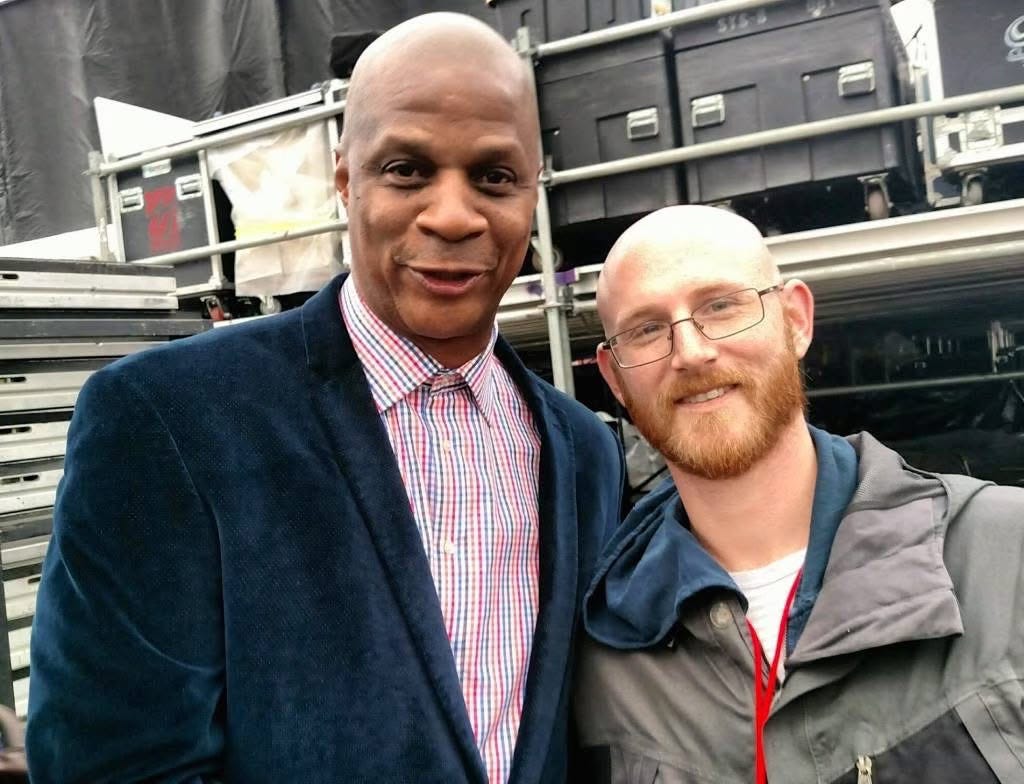
Standing backstage, I found myself talking with Darryl Strawberry.
I saw him perhaps 20 feet away, talking to a group of people. I slowly inched my way toward him, not wanting to come off over eager or disrespectful. Taking those slow steps, I felt as if I was ten years old again, working my way toward the front row seats at Shea Stadium while he was throwing the ball around, stretching, getting ready for that night’s game. I tried my best to look as cool and calm as collected, but I knew the smile overtaking my face would be impossible to hold back in any kind of authentic way. Darryl wrapped up his conversation, and slowly turned toward me, smiled, and stuck out his hand to shake mine.
Throughout my career in politics, I had met presidents, U.S. Senators, and other important people. Somehow, standing next to Darryl Strawberry meant more to me than any of those encounters.
We talked briefly about that beautiful swing of his and what it had meant to me. But more than that, we talked about recovery.
There he was. Still the man who had hit baseballs into orbit. Still one of my childhood heroes.
He was also another human being who knew shame. Someone who knew what it meant to hurt people, to disappoint people, to rebuild a life, and to keep moving forward.
I told him how much it meant to me to meet him, and he grabbed my hand tightly. “We’re both here because of recovery, brother,” he said to me. “Let’s not ever forget that.”
One of the two men I most closely associated with my love affair with baseball was standing before me, but in that moment, baseball was an afterthought. Instead, we stood there as two men whose journeys, while wildly different, somehow were connected. This isn’t unique to my interaction with Darryl. In fact, that connection with near strangers is one of the many gifts that recovery presents. But in a flash, I wasn’t just standing with a childhood hero. I was standing there with the entire man.
As he walked away, I remember thinking how much I wished Dwight Gooden could be standing there too. His own battles with addiction wouldn’t end for a few more years. But I had faith that he too could find his entire self as Darryl and I had. I’m happy to say that I’ve heard he has found exactly that.
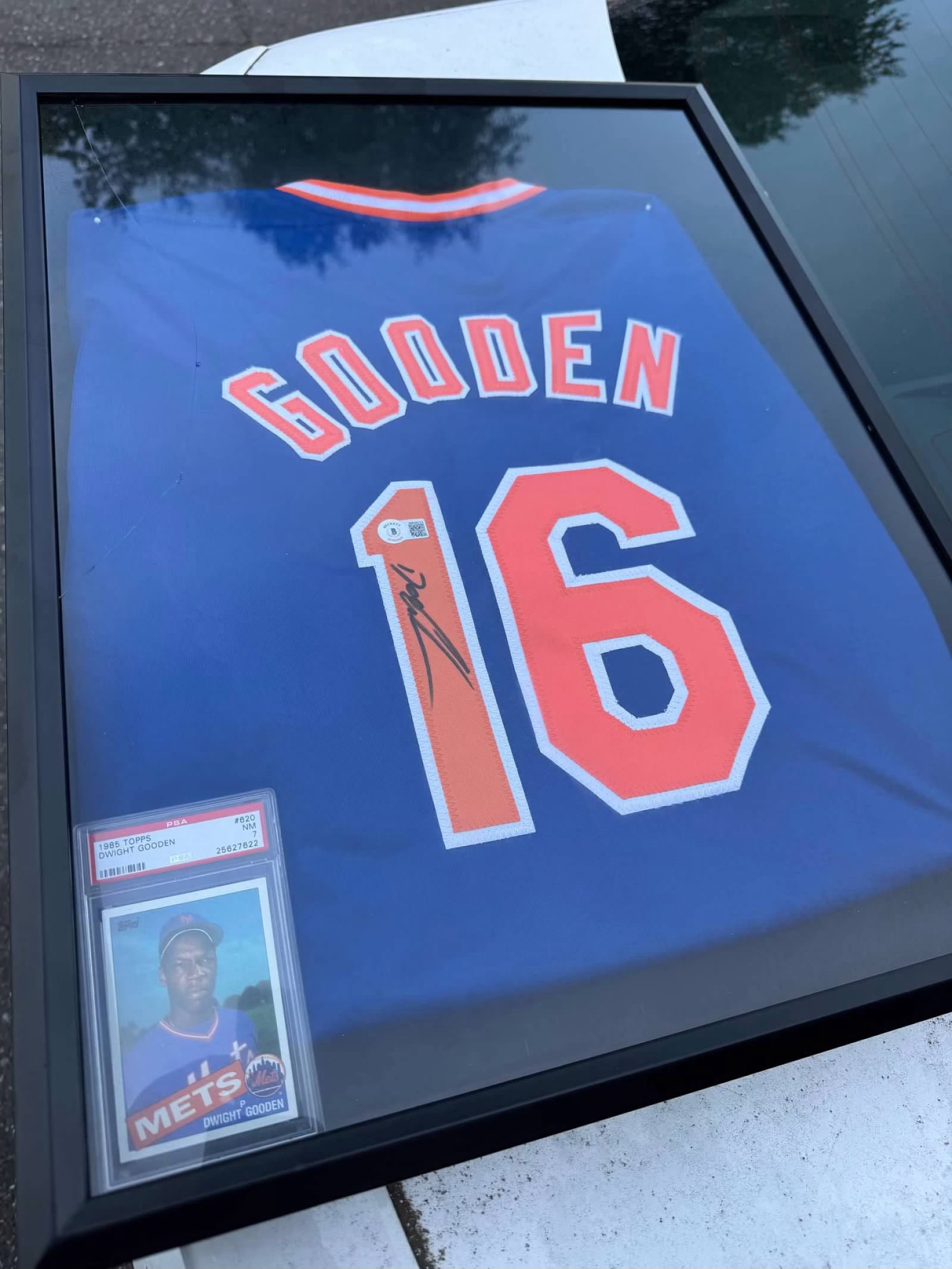
My own journey through addiction and recovery taught me something I never could have understood as a child. None of us are only our triumphs, and none of us are only our failures. We carry every chapter of our lives with us.
Darryl Strawberry is the man who hit baseballs farther than I thought possible. He’s also a man who has lived through addiction, public humiliation, recovery, and rebuilding his life.
Dwight Gooden is still the pitcher who struck out batter after batter with that ferocious fastball and devastating curve. He’s also someone who endured multiple arrests and bad headlines for years after his playing career was done.
I’m the guy who stole money from his employer and caused tremendous pain to those people I loved the most. I’m also the guy who has trained thousands of people in leadership, coaches Little League, and shows up for his family every day.
The older I’ve gotten, the more I’ve realized that these things aren’t competing truths. They simply make up the whole truth.
Greatness, I thought as a kid on a summer night at Shea, was when Doc would strike someone out with a 98-mph fastball at the top of the zone, or when Darryl would hit the scoreboard so hard with a line drive shot that I thought it could fall over. I still think those moments were great. But now I realize they were never the whole story.
If you enjoyed the piece, I hope you’ll consider subscribing to Between Innings.