Mom Never Cared Much About Baseball
But she did care deeply about me quitting on a team.

She simply wouldn’t let me quit.
I was 14 years old, and my days playing baseball were winding down. At 13, moving up to the bigger field, everyone was in a transition year, and I’d been able to capitalize on it. I had success on the mound, in the field, and even at the plate, where I had never truly thrived.
But by the following year, many of the kids whose skills were lagging had begun moving on to other adventures in life. I was still sticking it out, still playing the game that I loved. But things were not going well.
My catching, which had always been my biggest contribution to a team, was falling off. The velocity we were seeing was faster, and I simply couldn’t catch up. Even at second base, routine ground balls suddenly seemed harder and more difficult to field. Stepping onto the field, I usually felt more embarrassed than anything else.
I wasn’t heartbroken. I had never aspired to be a ballplayer long-term. My love of the game had always created fantasies of being a writer or a broadcaster long before being a player. But I loved being out there. So I wasn’t heartbroken by my diminishing ability. Perhaps more exposed.
That’s when I found my mom in the backyard one afternoon before a game I desperately didn’t want to play in.
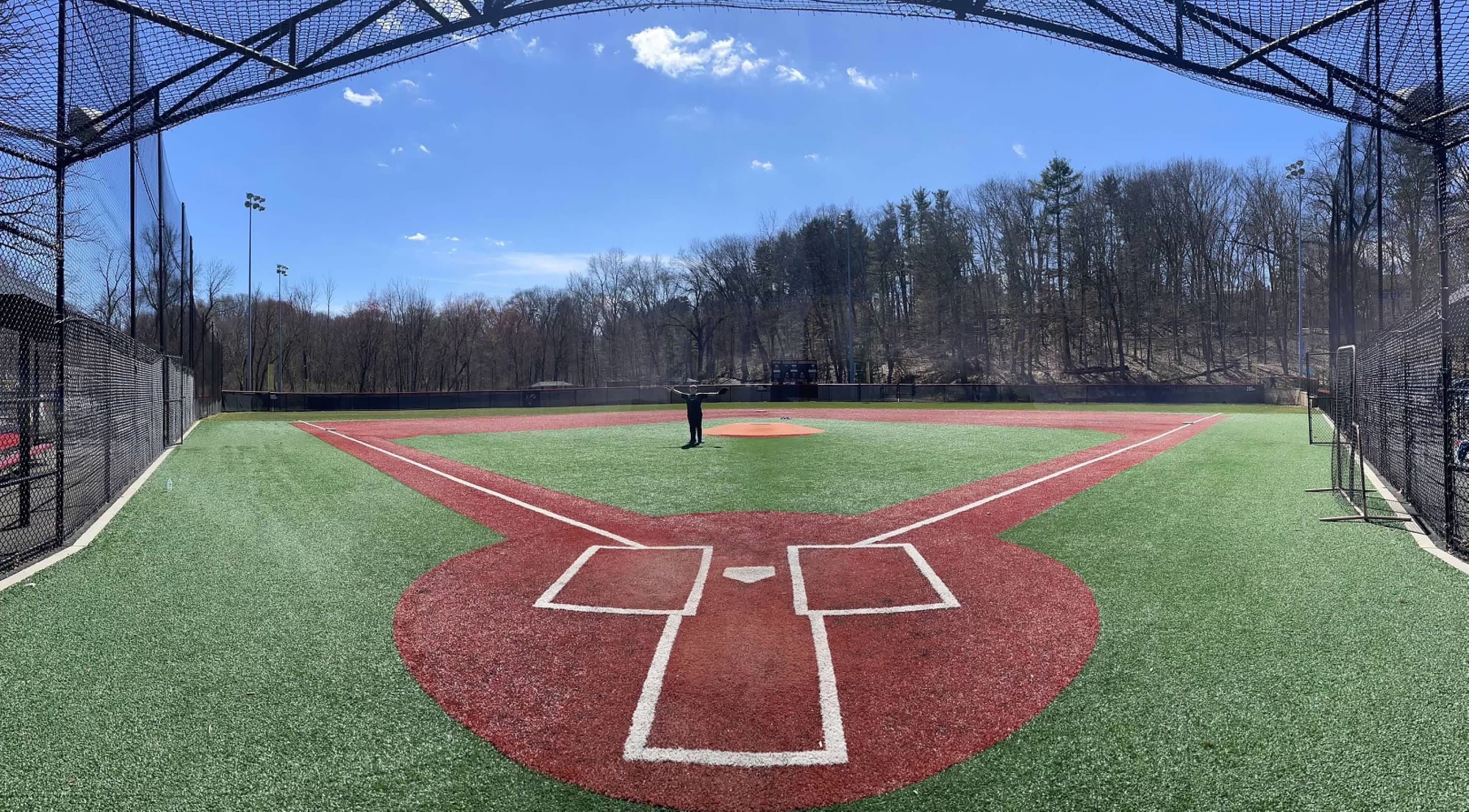
My mother doesn’t give a lick about baseball. Spending the last 40-plus years in a house with multiple baseball-obsessed men has, at times, driven her crazy. Endless conversations about what the Mets were doing, arguments over bad calls or missed plays, evenings scheduled around games that we all just had to watch.
Sure, she came to games when I was a kid, as all mothers do. Maybe snapped a picture or two, although much less frequently than we do now with cameras sitting in our pockets.
We took her to one Mets game when we were kids. It was the second game I ever attended. We sat in the green seats in the mezzanine section at Shea Stadium while the Mets played the Padres, and my mother barely watched a pitch, instead focusing on embroidery she had brought with her. We were so embarrassed that we never took her to another game again.
Baseball belonged to the boys.
Maybe that’s why asking her felt safest.
It was a warm spring afternoon in Connecticut, our lawn buzzing with early-season mosquitoes and bees. My mother worked in her garden, perhaps her truest passion, pulling green beans and tossing aside vegetables the deer had gotten to overnight. While our happy place was at the ballpark or in front of the television watching games, hers was out there with her hands in the dirt.
I walked outside and found her.
“Mom,” I asked, trying to dig down and find the sweetest tone I could manage. “I think I’d like to stop playing baseball. Do I have to go to the game today? Can I quit the team?”
No long justification. No inspirational monologue. Just a direct question to a direct woman.
My mother looked up from her tomato plants and gave me a look I had seen many times before. It was the look she gave whenever one of us asked something that somehow violated the code she lived by and tried to pass on to my brother and me.
“Quit the team?” she asked, sounding genuinely shocked that I would even ask.
“No way, Michael.”
Immediately disappointed, though somehow not surprised, I started to turn away without much argument. But she kept going.
“You made a commitment to those other boys and to that team,” she said flatly, plainly, in the way she always did. “If you want to quit after the season, no problem at all. You know I don’t care much about baseball. But I do care about you being a quitter.”
The rest of the season didn’t get much better.
After one final attempt on the mound where a player hit a ball off me in a game in Norwalk, Connecticut, that I’m pretty sure is still flying somewhere over Binghamton, New York, plus a few more booted ground balls and a lot of strikeouts, my playing career, at least for the time being, came to an end after that 14-year-old season.
There wasn’t much improvement. I still didn’t like my coach. I still loved the game, despite knowing my ability to play it had probably peaked.
But I made it through.
I endured the bad games. The failures. The moments where I felt overly seen out there on the field as the player I truly was.
My mother didn’t care much about baseball. But she cared deeply about me walking away from something simply because it had become uncomfortable.
Mom was never really a baseball mom. But she cared about us not quitting on ourselves. Not leaving behind a team. Not disappearing when things got hard.
And honestly, to this day, whenever I want to quit something, I think about that conversation in the backyard with mom.