More than a Baseball Field
How I found community at a Little League field 3,000 miles away from where I grew up

“I played here in 1955.”
I first met Gary almost five years ago, during his final season as an umpire. He had one of those voices that carried across a baseball field, always surprising given his soft-spoken, cordial nature off the field. To this day, I can still hear his enthusiastic, “He’s outttttt!” call after my son made a diving catch from behind the plate.
I wasn’t aware that umpiring was the final chapter in Gary’s long baseball story.
Gary coached for more than twenty years around Snohomish County, and like most of us, played the game in his youth. I saw him last week, several years removed from our league and still showing up to sit in the bleachers and take in the joy that is kids playing baseball on a sunny late spring evening. My team was playing in the second game, and arriving early meant I had plenty of time to take a seat next to Gary in the bleachers and catch up for a bit. Given that the evening would be the final night of Majors baseball on this field, given its upcoming closure, Gary’s detailed stories of playing on the field over 70 years ago somehow felt all the more special.
“I played here in 1955,” he said.
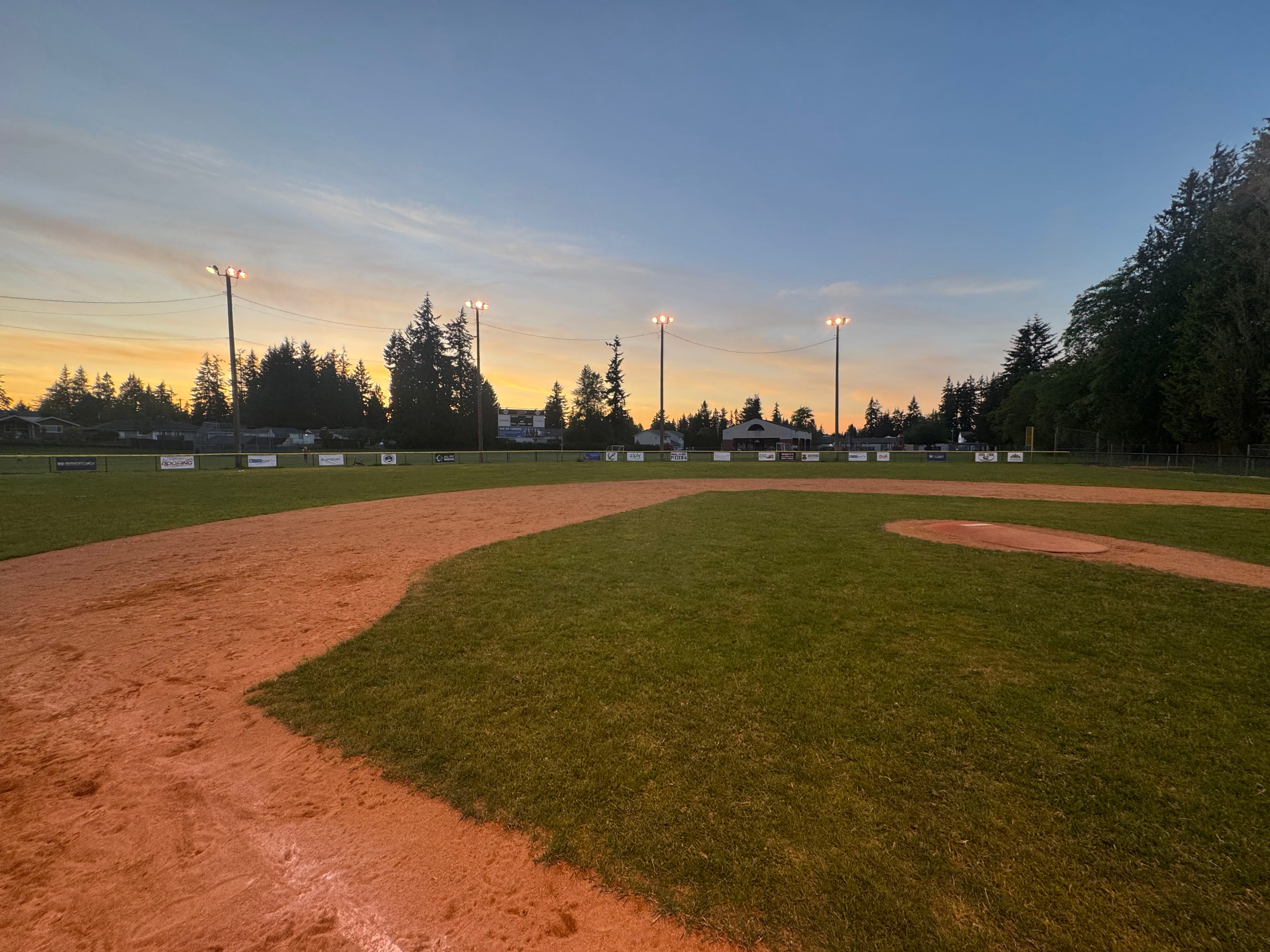
The dugouts were sunken back then, he told me. The grass was shorter, and the infield wasn’t quite as guilty of the dreaded “Madison hops” that so many Everett kids have experienced. The net around home plate that protects the cars of parents from errant foul balls was in better shape, and the outfield fence didn’t wear the rust quite as proudly as it does now.
As Gary talked, I found myself staring out at the diamond, soaking in the field. Madison will be closing after this season, eaten up by the school district as it rebuilds the neighboring elementary school and builds what they claim to be a highly necessary bus turnaround on the spot where kids have been playing infield for seven decades. That night was the final night of Majors baseball games that will be played there. Something about the math of it all struck me. I couldn’t help but look back at Gary and imagine him as one of those very kids, running around the same field so many years before.
After a few minutes, we shook hands and said goodbye as the game on the field was beginning to wind down, meaning it was time to make sure my team was preparing for our game. Beyond the left-field fence, my players were gathering for warmups. A few were hitting off a tee. Others were launching whiffle balls into the grass. Some were working through throwing bands, getting their arms loose before the first pitch. At face value, the entire scene was entirely ordinary. Just what we all did on Mondays, Wednesdays, and Friday nights in Everett.
Every one of those kids had a connection to this place. For most of them, Madison was where they first found baseball. Where they got their first hit, made their first catch, won their first game, or suffered their first agonizing defeat.
I hadn’t found any of my own hits, errors, catches, or wins at Madison. I found baseball nearly 3,000 miles away at Mellick Field in New Canaan, Connecticut. That’s where my dad coached. It’s where I brought my own bag filled with glove, bat, and candy and tried my hardest to drive baseballs into an outfield that seemed impossibly large, far away, and perfectly green.
By the time I arrived in Washington state years later, I hadn’t watched kids play baseball in years, my love of the game stemming only from my daily following of everything happening around the Major Leagues. It wasn’t until my son started playing that I found this very special lane back to it, one that quite honestly supersedes the million-dollar professionals, no matter how much cleaner they may play.
At first, Madison was just any other field. A place to watch my kid and his friends play their games. To occasionally volunteer. And eventually, a place to coach.
But along the way, under the surface, it became so much more.
I kept to myself in these first few years of coming here. I’d watch my son’s game and head home afterward, not spending much time greeting other parents or building any kind of connection. That changed over time. Conversations began to turn into friendships. Familiar faces became people I looked forward to seeing throughout the week. These families became part of the rhythm of life.
I got to know this community, my community, at Madison. Not because of any single game, or a championship, or even one specific season. But just because these families, and my own, just kept showing up. Showing up to watch their kids or volunteer in the snack shack, or even to just hang out and see who might be bumming around the field on any particular night.
And they kept coming back spring after spring, year after year.
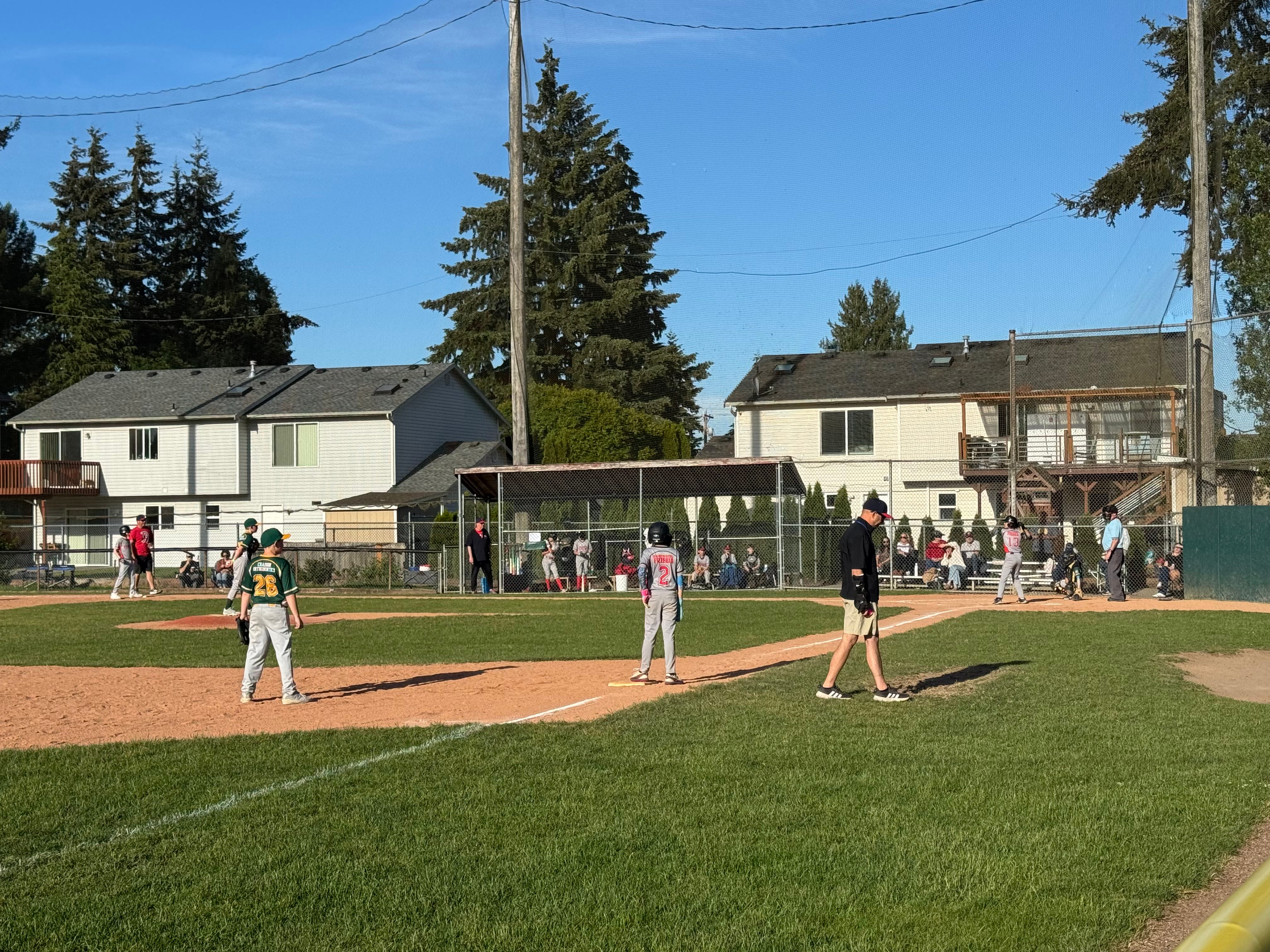
I’ve watched kids grow from energetic six-year-olds into teenagers nearing driving age. I’ve spent more time than I could count standing beside parents, watching both wonderful plays and enduring brutal, never-ending innings. I’ve coached with and against people who have become some of my closest friends. And, as my waistline will show, I’ve eaten more snack shack burgers than I care to admit.
Along the way, Madison stopped being a baseball field and became the place that made Everett feel like home.
A few innings into our game last Wednesday, I turned around to see if I could catch Gary’s eye one more time. I scanned the bleachers but couldn’t spot him. He had gone home. An elderly man heading home after another evening at the field.
I found myself thinking about the version of Gary who had stood here in 1955. One of the kids running around the field before a game. One of the kids climbing into the dugout. One of the kids hoping for a hit. Seventy years later, he was still coming back.
He couldn’t have known that he’d spend decades coaching, umpiring, and watching games here. He couldn’t have known that he’d be telling those stories to a coach who grew up 3,000 miles away in Connecticut.
And yet we found ourselves both connected by a place neither of us thought much about while we were living through it.
Madison will be gone next year.
But long after the fences come down, Gary will still have played there. My son will still have played there. Thousands of kids will still carry pieces of it with them.
The field is disappearing. The community it built isn’t.
A beautiful reminder that baseball fields are so much more than just patches of grass and dirt.
A special place, a wonderful community ❤️