The Game Is Ours
The moment I realized my son didn’t need me to teach him baseball anymore

“Here’s what I want to know.”
My son and I were driving home from his baseball tournament, the heat blasting in the car after a long, cold day at the ballfield in mid-March. As is customary for anyone leaving a ballgame, be it in the big leagues or on small diamonds spread across our cities and towns, we were engaging in postgame analysis. We’ve been doing this for years, going back to his days hitting off a pitching machine in Rookies, to the years I coached him in Little League, to now, with him playing on a select team. We were replaying the final inning together, at-bat by at-bat.
“Why didn’t their coach have the infield playing in?”
I looked up to catch his face in the rearview mirror, his expression reflecting utter bewilderment at the opposing team’s choice to keep the infield back, given the situation. But I let him continue, leaving any thoughts I might have tucked away.
“We knew it was the last inning,” he continued. “If I scored, the game was over. So I don’t know why they played the infield back.”
A smile crossed my face. It probably gave away more pride than I intended. Baseball games, my son knew, turned on decisions like that all the time. But my pride came from the way I heard him thinking about the situation in the game. He wasn’t talking about the game like a kid who had just played it for the sake of playing it. He was seeing the whole picture.
This conversation stayed with me. The next morning, sitting at the breakfast table, it hit me. My son doesn’t need me to teach him a single thing about baseball anymore. Now, we just get to share it.
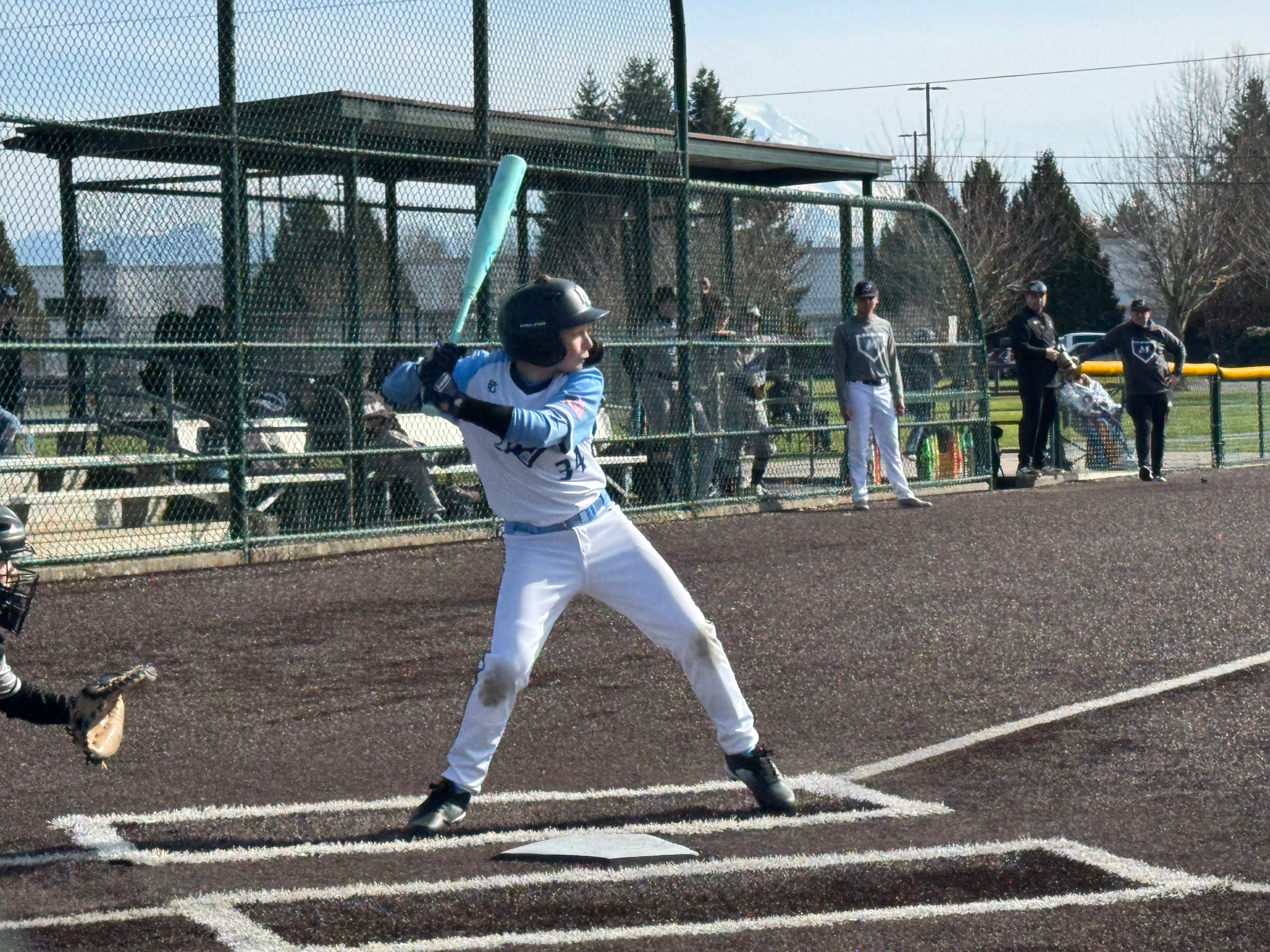
The day before had started with the less-than-ideal conditions that families with ballplayers in the Pacific Northwest are accustomed to in March. Only that day, it wasn’t rain that was threatening the weekend’s tournament, it was snow. A flurry began to roll across the fields about twenty minutes before the 8:00 a.m. first pitch, and by the time they were ready for the boys to take the field, the white foul lines were nonexistent under the blanket of snow that covered the turf. A four-hour delay was announced by the tournament hosts, as well as the choice to make each of the first day’s games come to an end at the 80-minute mark. Timed baseball games aren’t exactly aligned with the traditions of the sport, but it’s often the reality of youth tournaments trying to get games played.
After the games finally got underway, my boys’ team won their first game 4-3, but found themselves trailing 2-1 late in the second game. When they came to the plate in the bottom of the fourth, the clock was becoming part of the equation. If they were going to go 2-0 on the day, they not only had to take the lead that inning, but they were also going to have to do it quickly.
The team’s leadoff hitter worked a four-pitch walk to start an inning, and he was followed by my boy, who also took a base on balls, putting runners on first and second with nobody out. The boy hitting in the three spot, a wonderful kid whose bat has been on fire to start the season, sent one over the head of the center fielder, sending in the tying run and moving my son to third base as he pulled into second. Now the game stood tied, with the winning run on third base. This inning was it. In pool play, a tie was the best possible outcome for our opponents. With nobody out, they could not allow my son to score from third base. And yet, their defense stayed at their normal depth.
The next hitter took a 2-2 pitch and drove it into the left-center field gap. Game over. The scorekeeper gave us both runs, and our boys walked away victorious 4-2. Just like that, the boys were 2-0 on that cold day as they sprinted onto the field to congratulate their teammate for his game-winning rope into the gap. Cold parents clapped their freezing hands and most quickly packed up their folding chairs and bleacher seats so that everyone could celebrate the day’s victories in the warmth of their vehicle, and hopefully their home.
My son and I got back to the car, eager to thaw out from the cold day of baseball, and I told him how proud I was of him and his teammates for battling to the very end. That type of fight, the willingness to keep pushing forward even when they are behind, is always where as a parent and as a baseball fanatic, I find myself brimming over with pride. But my son often quickly moves from the sentimental right into the analysis, wanting to rehash what he believed had been a clear coaching mishap on the part of our opponent.
That’s when he brought up the infield positioning of the other team.
My boy started playing baseball very young, and he has been watching it with me even longer. The game has always been something we shared, a connecting point between the two of us from his earliest days. As a toddler, he would sit next to me on the couch while I watched games. Sometimes he would play with toys while the game flickered on the screen in the background.
Gradually, I started to notice his eyes locking in on the television to see what was happening on the field. He was trying to understand what he was seeing, often repeating the player’s name back to me in the slightly mangled way youngsters do when they’re still figuring out how different sounds all fit together.
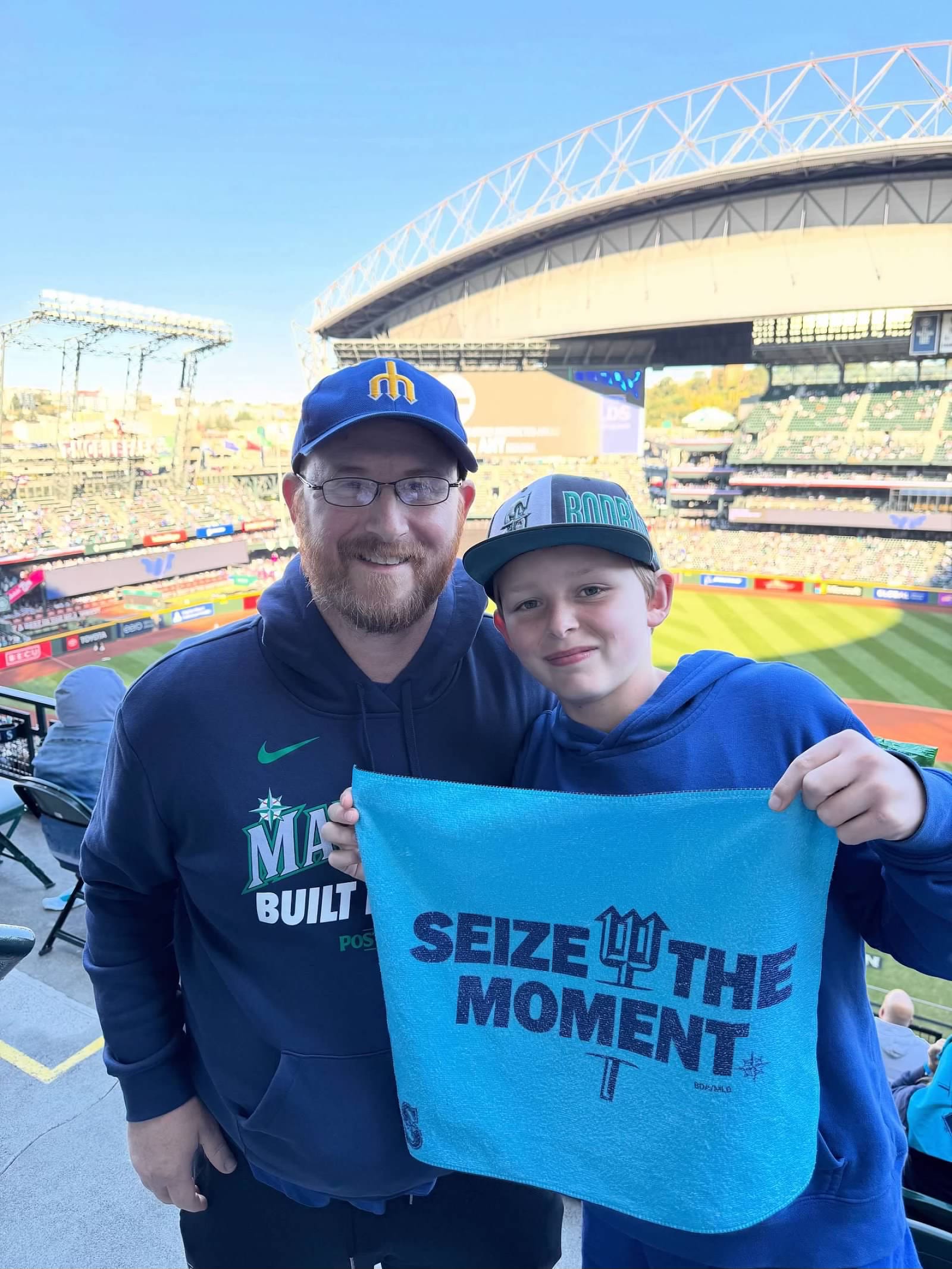
His first Mariners came when he wasn’t quite two years old yet. He was too young to remember it, but I certainly do. I’m sure every parent remembers the first time they brought their kid to the ballpark. We were sitting in the center-field bleachers at T-Mobile Park, and sometimes around the third inning, with the ketchup from his hot dog smearing across his face, his eyes suddenly came alive, as if he suddenly understood where he was. The green grass, the crowd cheering, and the sounds of the game all came together around him. All at once, it seemed to click, and something lit up in him that afternoon. It has never really faded since.
We always played constantly in the yard. My son, his sister during her brief playing days, and I. Walking through how to properly throw the balls and how to field a grounder correctly. It was quickly obvious that baseball belonged to him in a special way. Always asking for a few more swings or five more minutes of catch. The moment we would get home, he’d run to get his bat and glove and ask if we could get out in the yard and play. He never seemed to tire from it and, especially for a kid his age, his attention barely wavered at all. It was baseball, all the time, much the same way as it had been for me growing up in the backyard with my father and my younger brother.
As he kept getting older and his understanding of the game went beyond catching, throwing, and hitting, the history lessons started. I passed along all the stories my dad had told as a kid about growing up in the 1950s and 1960s, watching Willie Mays and Mickey Mantle and Sandy Koufax, all the great players of that golden era. Now, I get to layer in my own memories, with stories of Griffey, Bonds, Pedro, Maddux, and Randy Johnson.
It didn’t take him long to start engaging in the debate – arguing is as long a family pastime in our house as baseball. The questions began being tossed about. Who was the best hitter of all time? Who was the best shortstop? Which pitcher was the most dominant? My son seemed to absorb every story he was told. It was as if each piece of information was something deeply valuable that had to be grasped tightly and held close.
Stories being passed from parent to child, from generation to generation, is one of baseball’s most significant gifts. Some of us heard these stories so often in our youth that it began to feel like we were in that moment ourselves. I almost feel as if I was sitting next to my father and his father at Candlestick Park in the early 1960s, watching Willie Mays play, even though he retired nearly a decade before I was born. I wonder if my son feels the same way about Griffey, and Edgar, and the Big Unit.
We’ve taken in some wonderful Mariners games together, just the two of us. While it’s wonderful when the whole family heads out for a game, I think everyone silently knows the truth – my son and I going on our own is something altogether different. Special in a very different way. And we’ve taken in some terrific games, from Shed Long’s walk-off grand slam, to the final hurrah for the King himself, Félix Hernández. The 18-inning marathon that was the third game of the American League Division Series in 2022. And of course, in 2025, the playoff run and the Eugenio Suárez grand slam in Game 5 that sent the series back to Toronto with our Mariners one (seemingly unattainable) win away from their first World Series.
Throughout the year, as spring turns to summer and eventually summer to fall, no matter what kind of day either of us has had, eventually one of us will turn to the other and ask the same question. “What’s the score in the Mariners game?” Or often the even more important one, if we haven’t had time to tune in. “Did the Mariners win today?”
But sitting in the car this past weekend after his first day of tournament play, listening to him break down the situation at the end of the game, from the time left to the thought process of the coaches, and the defensive positioning, I realized that something had quietly shifted over time. When he was standing at third base that afternoon, ninety feet from home, watching the infield play back, the voice in his head wasn’t mine.
It was his own.
Whatever lessons of the game I’ve tried to pass along over the years, be it fundamentals on the field or stories from the past, he has absorbed them all and made them his own. I’m not teaching him the game anymore. He understands it, and he loves it.
The game isn’t mine to give him anymore. Instead, the game is ours.