Two Different Cities, Two Different Teams
What I discovered watching baseball in Seattle and New York

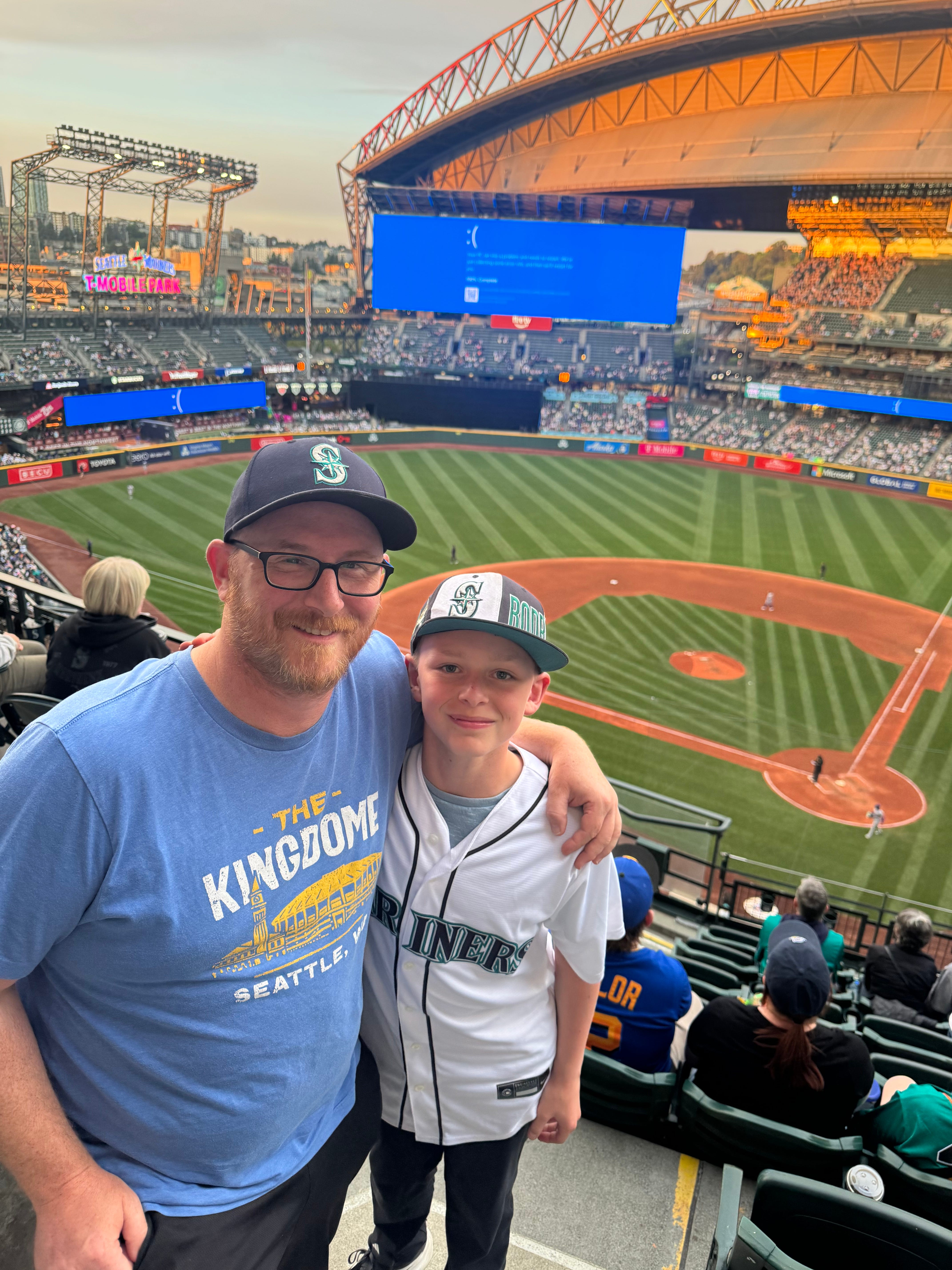
This past Monday, my son and I were at T-Mobile Park in Seattle, watching the Mariners open up their series against the Mets.
The early part of the season has been deeply frustrating for Mariners fans, given the preseason hype. With each game I’ve attended, alone or with others, the mood in the park has often been rife with anger and irritation. Thankfully, that agitation has been giving way to excitement over the past week, with the Mariners finally starting to turn the tide. My son and I, sitting in our usual seats in the lower bowl of the upper deck, in the sections that wrap around home plate, hadn’t been to a game on our own since April. We were eager for a Mariners win.
Less than twenty-four hours later, I was sitting at a small spot called The Dive Bar at West 96th Street and Amsterdam Avenue on the Upper West Side of Manhattan watching the Mariners and Mets play the second game of their three-game series.
Same matchup. But on opposite ends of the country. Surrounded by different crowds.
Monday night, I was surrounded by Mariners fans who, for the first time this year, were beginning to thrive on the excitement and hope that a baseball team on the rise brings to its fans.
Tuesday night, I was surrounded by Mets fans who, given the ineptitude the Mets have brought to the field early this year, seemed largely prepared for the worst.
Some of that may have had to do with the Mets’ horrendous start to the season. Some of it may have had to do with the fact that much of the conversation in the bar centered around the New York Knicks and their first trip to the NBA Finals in more than twenty-five years. Either way, the mood felt very different.
Sitting on my own, I briefly chatted with the server, and then with two men sitting at the neighboring table, who I overheard complaining about the Mets’ disastrous start to 2026.
And yet, despite the differences, something felt remarkably familiar.
My son and I know T-Mobile Park well.
Our Flex Membership gets us to somewhere between ten and twenty games a season, and we usually sit in the same sections. Upper deck. First few rows. Somewhere around the curve behind home plate.
We know the sightlines. We know how to read the trajectory of the ball off the bat.
Around the fifth inning, we usually start playing our attendance game, trying to guess the official crowd before it’s announced after the final out.
I’ve probably been to more games at that ballpark than any other by now, and probably by a wide margin.
Twenty years ago, walking into my first Mariners game after moving to the Pacific Northwest, I never could have imagined that a baseball stadium so far away from where I’d grown up would ever truly feel like home.
But there is nowhere in Seattle that feels more like home than T-Mobile Park. For nine innings, whatever stresses or frustrations I may be carrying tend to fade into the background.
After 20 years, Seattle is clearly home. And T-Mobile Park is my favorite room in the house.
Growing up just about an hour outside of New York, I felt something similar about the city, though youth didn’t afford me the experience or vocabulary to name it at the time. So many of my favorite childhood memories were created in the city. My mother and I would get on the Metro-North train in Port Chester, just over the state line from where we lived in Greenwich, and we would head into Manhattan. Sometimes my younger brother came along. When I was very young, my elderly but capable great-grandmother joined us as well.
Anyone who knows me knows this. New York remains my favorite city in the world. I love the noise, the energy, the vibrancy of its people. I love the feeling that every subway stop contains possibilities. I often daydream about, once the kids are grown, convincing my partner Jamie that moving to New York would be an adventure worth taking together. And despite being one of the largest cities in the world, New York somehow still feels like a collection of neighborhoods.
The Upper West Side has always been the neighborhood where I imagined myself living.
Looking around that bar, I felt all those feelings emerge in a profound and powerful way. People were chatting over drinks. Some wore Mets hats, with more than a few Yankees hats mixed in. I overheard young people discussing who was dating whom, and older folks reminiscing about the past and complaining about the present. The sound of glasses clinking together. The smell of food drifting through the room. The steady hum of conversation.
And, of course, baseball was on the television.
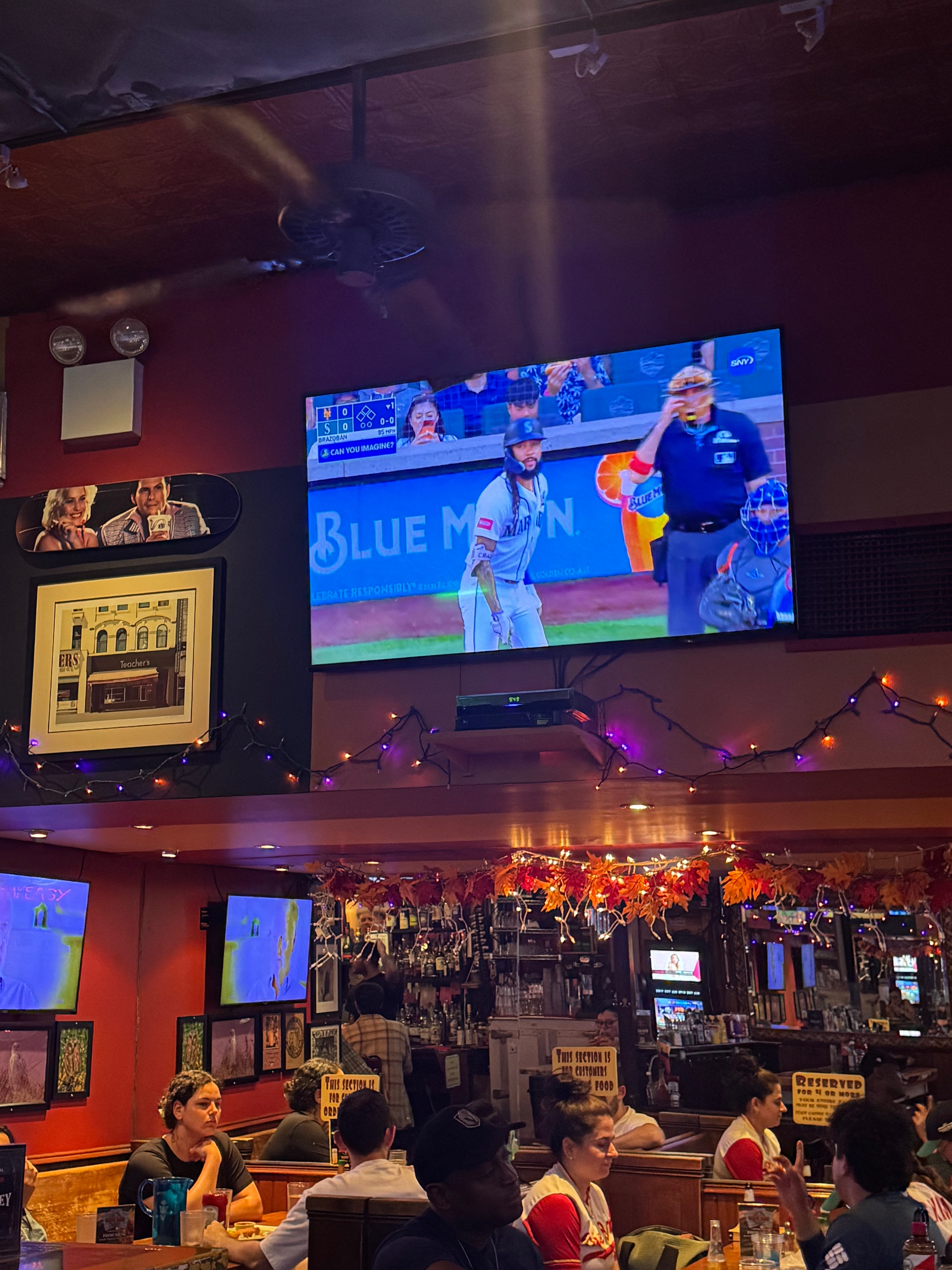
The Mets were my team growing up, and I loved them with all the passion a young sports fan brings to their fandom. Truthfully, I still love them and still watch and follow them, though not as closely as my Mariners. As a kid, I couldn’t wait until the afternoon would turn to evening, and I would turn on Channel 9 or listen to WFAN with my dad and brother. After winning the World Series when I was five years old, the experience of being a Mets fan was mostly a lesson in disappointment. But that never stopped me from tuning in and talking Mets baseball with anyone who would join me.
Looking around the bar, it struck me that many of these folks, especially the other 40-somethings with their fading hairlines and expanding waistlines, had likely done the same thing.
And that’s when it struck me. The night before I had been surrounded by Mariners fans. Tonight I was surrounded by Mets fans. Two different cities. Two different teams. Two different histories.
But neither group felt foreign to me. The accents around me were the accents of my childhood. The conversations sounded familiar. The rhythms felt familiar. Even though I was now quietly rooting for the other team, I knew these people. Not because baseball fans are all the same. Because these were two communities that had both helped shape me.
Seattle is where I built my adult life. It’s where I raised my kids. Built a career. Blended families. And it’s where I learned to love the Mariners.
New York is where so many of my earliest memories were formed. It’s where my love of baseball began. And somehow, sitting in that bar, it struck me that both places still felt like home.
The following night I was back in the neighborhood grabbing a quick dinner before heading to a Broadway show. While chatting with the bartender, he mentioned that there was someone from Seattle sitting nearby. I turned around and immediately recognized her. The night before, sitting across the bar, I had noticed a woman wearing a Mariners hat. Now she was sitting just a few feet away working on her laptop and occasionally glancing up at the game.
We exchanged a few pleasantries before returning to our evenings. It was nothing remarkable. But somehow, it felt like a small bridge. As though Seattle had unexpectedly shown up in New York for a moment. As though the two worlds I had been thinking about all week weren’t quite as separate as I sometimes imagine.
Two nights, 3,000 miles apart. One with my son at T-Mobile Park. One on my own, sitting among Mets fans on the Upper West Side. But both felt completely familiar, like places where I belonged.
Baseball isn’t the only reason for that. But it is one of the strongest threads connecting both places in my life. As a kid, it helped tie me to New York. Today, it helps tie me to Seattle, to my son, and to a community I love. For two consecutive nights, in two very different places, it reminded me that home doesn’t always have to exist in a single location.